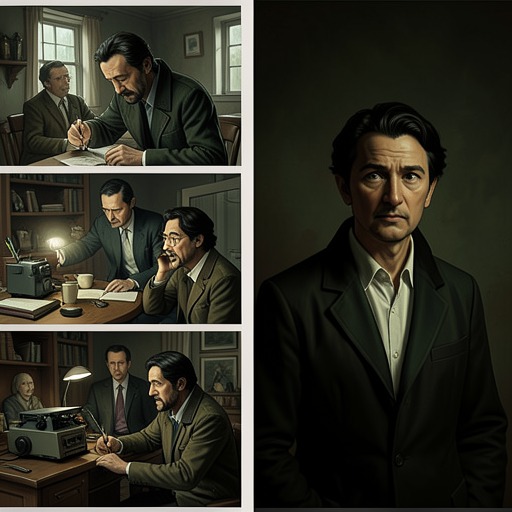
Don Redelmeier
Thinking, Fast and SlowDon Redelmeier is a physician and researcher at the University of Toronto whose work with Daniel Kahneman made the conflict between lived experience and remembered experience experimentally visible. His role is not that of a narrative protagonist with an independent personal arc, but of a rigorous collaborator who turns fleeting bodily states into measurable evidence. In the studies associated with him, pain is recorded as it occurs, then compared with the story people tell themselves afterward; the difference becomes a central fact about human judgment.
Identity and Research Partnership
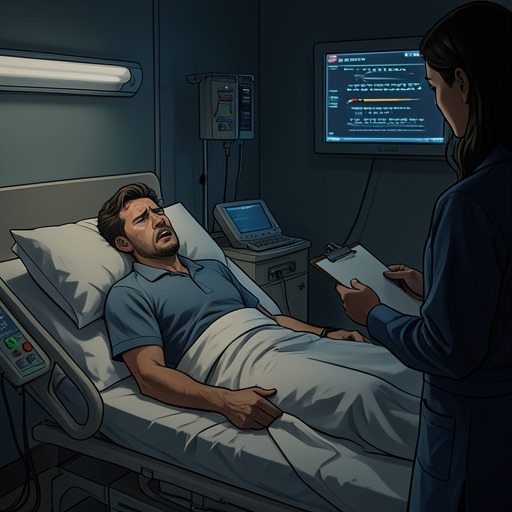
Redelmeier carried out the early-1990s colonoscopy research that he and Kahneman designed together. The procedures were performed before anesthetic and amnesic drugs had become routine, allowing the researchers to collect detailed reports of pain as patients experienced it. The study involved 154 patients, whose procedures ranged from four to sixty-nine minutes. Redelmeier’s contribution was therefore both clinical and methodological: he helped place subjective suffering on a moment-by-moment scale while preserving the conditions needed to compare immediate reports with later evaluations.
The collaboration connected medical research with Kahneman’s broader investigation of judgment. Rather than treating a patient’s later global assessment as a transparent account of the procedure, the researchers separated two kinds of evidence: reports made during the episode and retrospective judgments made after it ended. This distinction gave concrete form to the difference between experienced utility and decision utility, showing how an experience can be worse in real time yet remembered as less unpleasant.
The Colonoscopy Study
During the colonoscopies, patients were prompted every sixty seconds to rate their current pain from zero, meaning no pain, to ten, meaning intolerable pain. The records showed considerable variation within individual procedures and substantial differences in duration. One representative patient underwent an eight-minute procedure, while another endured twenty-four minutes; the second patient experienced at least as much pain at every level and had the larger duration-weighted total. By the logic of momentary experience, patient B plainly suffered more.
The patients’ later judgments did not reproduce those momentary records. When asked to rate the total amount of pain, they appeared to rely chiefly on the average of the worst moment and the final moment. This finding became the peak-end rule. Duration had no effect on the retrospective ratings, a pattern termed duration neglect. Redelmeier’s medical study thus supplied a striking reversal: the patient whose procedure was longer and objectively more painful could retain the less unpleasant memory if the procedure ended gently, whereas a shorter procedure ending at a bad moment could dominate memory.
The published research, cited as “Patients’ Memories of Painful Medical Treatments: Real-time and Retrospective Evaluations of Two Minimally Invasive Procedures,” made the contrast more than a philosophical claim. The patients’ immediate reports measured the unfolding experience; their later answers measured an edited evaluation shaped by a peak and an ending. Redelmeier’s work helped establish that these are not interchangeable measures of suffering.
The Cold-Hand Experiment
Redelmeier was also associated with the cold-hand research that tested whether remembered pain could govern a later choice. Participants immersed a hand in painfully cold water while using the other hand to record their pain continuously. The short trial lasted sixty seconds at 14 degrees Celsius. The long trial began identically but continued for another thirty seconds, during which slightly warmer water entered the tub and reduced the pain by roughly one degree.
From the perspective of the experiencing self, the long trial was unambiguously worse because it contained everything in the short trial plus thirty additional seconds of discomfort. The remembering self, however, evaluated the episodes through their endings. When participants were later offered a choice between repeating either experience, 80 percent of those who noticed the pain decrease during the long trial chose to repeat that longer episode. The choice amounted to accepting needless additional pain because the ending had improved the memory of the experience.
The experiment did not portray the participants as masochists. They knew which exposure had lasted longer, but that knowledge did not control their decision. They chose the episode they remembered as less aversive. In this setting, Redelmeier’s experimental collaboration exposed a practical consequence of the peak-end rule: retrospective memory can become the basis of future choice, even when it conflicts with the interests of the self that will actually undergo the experience.
Methodological and Thematic Significance
Redelmeier’s importance lies in the precision with which his medical research separates an event from its later mental record. A hedonimeter-style account would calculate the area under a pain curve, giving greater weight to longer procedures. The colonoscopy findings showed that people do not naturally remember pain in that duration-sensitive way. Instead, memory compresses an extended episode into selected moments, especially its worst point and its conclusion.
This distinction extends beyond clinical treatment. It bears on how people assess vacations, procedures, and other episodes when making later decisions. The remembering self keeps score, while the experiencing self undergoes the actual sequence of sensations. Redelmeier’s collaboration helped demonstrate why a person may prefer an option that produces more total suffering if it leaves a better remembered ending.
The same research program also informs the study of experienced well-being. Kahneman’s later work distinguished immediate emotional experience from the global life evaluations supplied by the remembering self, using experience sampling and the Day Reconstruction Method to measure activities, attention, social contact, and feelings over time. Redelmeier’s contribution is the medical and experimental foundation beneath that distinction: before well-being can be evaluated, researchers must decide whether they are measuring the flow of experience, the memory of it, or the decisions that memory subsequently directs.
Narrative Role and Legacy
Within the book’s account, Redelmeier functions as a scientific partner whose experiments give bodily force to an abstract psychological argument. The theory of remembered utility might remain merely conceptual without the patients’ pain curves, the 154-procedure sample, and the cold-hand choices. His studies turn duration neglect into a visible discrepancy between what happened and what people later report, while the improved ending in the longer trial supplies the paradox that makes the finding memorable.
Redelmeier therefore represents a particular model of empirical collaboration: clinical observation joined to psychological analysis. His research does not simply confirm that memory can be inaccurate. It shows how a systematic rule organizes that inaccuracy, how the rule affects retrospective judgments, and how those judgments can govern later behavior. The resulting lesson is unsettling but precise: the mind that remembers an experience is not the same mind that endured it, yet the remembering mind often controls what happens next.